


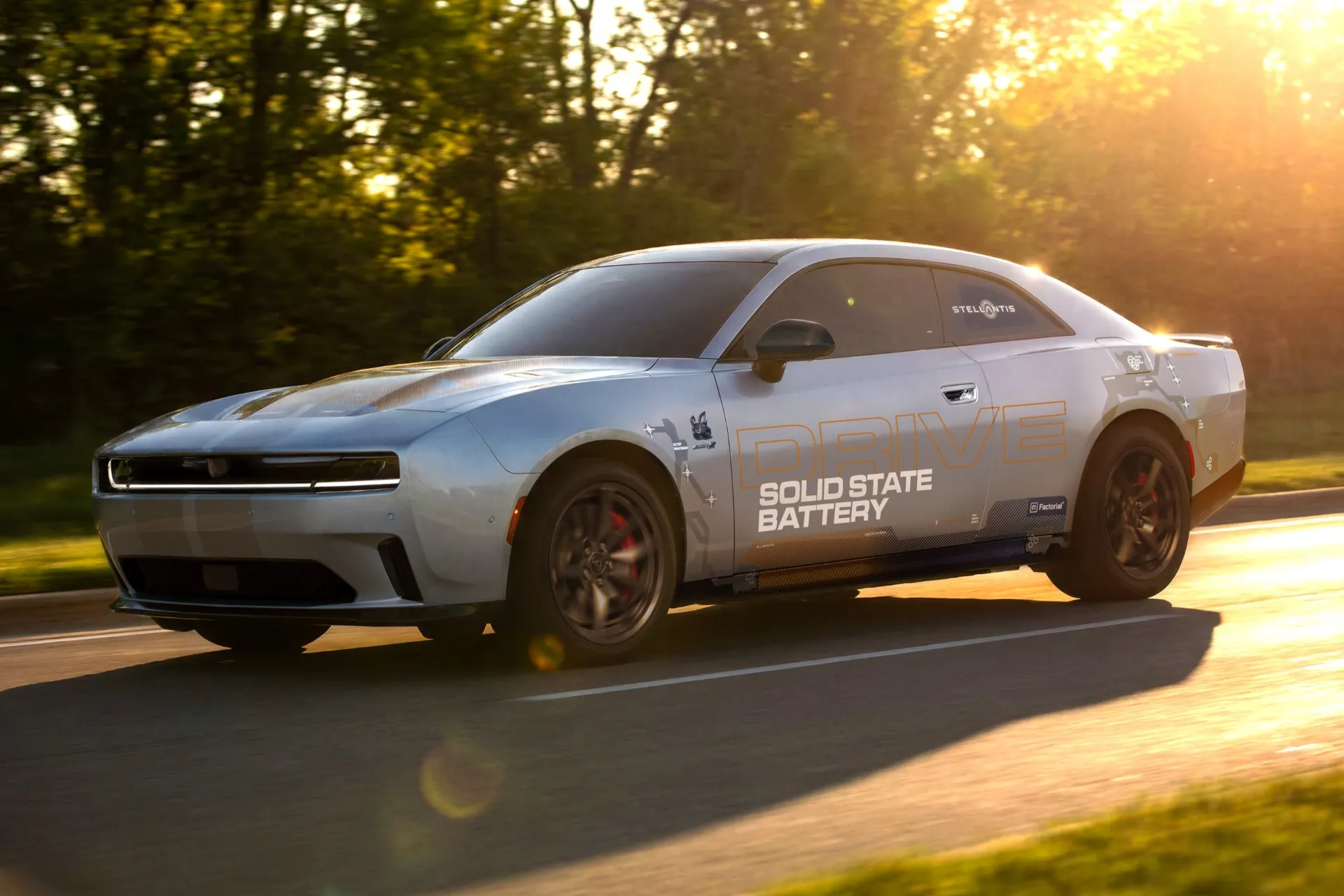
Stellantis Advances EV Innovation with Solid-State Battery Integration
Stellantis has taken a significant step forward in the evolution of electric vehicles by integrating advanced solid-state battery technology into a development vehicle for the first time in North America. Working alongside battery innovator Factorial Inc., the automaker has successfully incorporated Factorial’s FEST® (Factorial Electrolyte System Technology) solid-state battery cells into a Dodge Charger Daytona development vehicle and launched a comprehensive road-testing program. This milestone reinforces Stellantis’ commitment to advancing next-generation EV technology and enhancing the future performance of Stellantis vehicles.
The achievement represents the first automotive integration of Factorial’s solid-state battery technology into a Stellantis vehicle and marks an important phase in the companies’ previously announced multi-stage development program. As demand for longer-range electric vehicles and faster charging solutions continues to grow, solid-state batteries are emerging as one of the most promising innovations in the automotive industry.
Dodge Charger Daytona Becomes First Stellantis Development Vehicle with FEST® Technology
The Dodge Charger Daytona development vehicle serves as the first platform to showcase the integration of Factorial’s advanced solid-state battery cells. Built on Stellantis’ STLA Large architecture, the vehicle provides a real-world testing environment for validating the performance, safety, and durability of the technology.
Unlike traditional battery systems, the battery pack utilizes a patented mechanical architecture developed by Stellantis engineers specifically to accommodate solid-state battery cells. This innovative design allows engineers to maximize battery performance while maintaining the rigorous safety and durability standards required for automotive applications.
The integration process required extensive collaboration between Stellantis and Factorial engineering teams. In addition to incorporating the cells into the battery pack, engineers adapted vehicle control systems and pack designs to optimize battery operation under a wide range of driving and charging conditions.
Solid-State Batteries Promise Longer Range and Faster Charging
One of the key advantages of solid-state battery technology is its potential to significantly improve electric vehicle performance. In 2025, Stellantis and Factorial successfully demonstrated FEST® battery cells with an energy density of 375 Wh/kg. The cells also achieved ultra-fast charging capabilities, allowing charging from 15% to 90% in just 18 minutes.
Beyond charging speed, the technology demonstrated reliable operation across a broad temperature range from -30°C to 45°C. These performance characteristics highlight the potential for future Stellantis EVs to deliver greater driving range, improved efficiency, and enhanced customer convenience.
According to Stellantis Chief Engineering and Technology Officer Ned Curic, battery development requires balancing multiple performance metrics rather than focusing on a single attribute. The successful integration of FEST® technology demonstrates a pathway toward bringing longer-range electric vehicles, faster charging, and lower battery costs to future customers.
Real-World Road Testing Begins for Next-Generation EV Batteries
With the integration phase completed, Stellantis and Factorial have initiated a road-testing and calibration program designed to validate battery pack performance in real-world conditions. Engineers will evaluate charging behavior, driving performance, reliability, and overall vehicle safety throughout the testing process.
Real-world testing is a critical step in transitioning solid-state battery technology from laboratory validation to commercial automotive applications. Data gathered during the testing phase will help both companies refine battery management systems, optimize performance, and further validate durability under everyday operating conditions.
The road-testing program represents a crucial milestone in the development of next-generation Stellantis electric vehicles and demonstrates the company’s continued investment in future mobility solutions.
Collaboration Between Stellantis and Factorial Accelerates Innovation
The partnership between Stellantis and Factorial continues to play an important role in advancing solid-state battery technology toward production readiness. Factorial CEO Siyu Huang described the achievement as the result of deep collaboration spanning cell chemistry, battery pack architecture, and real-world vehicle testing.
This full-stack development approach allows both organizations to address the complex engineering challenges associated with bringing automotive-grade solid-state batteries to market. By combining battery innovation with Stellantis’ expertise in vehicle engineering and manufacturing, the companies are helping establish new benchmarks for EV battery performance and scalability.
What This Means for Future Stellantis Vehicles
The successful integration of FEST® solid-state battery technology into a Dodge Charger Daytona development vehicle signals an exciting future for Stellantis brands. As the company continues testing and refining the technology, future Stellantis electric vehicles could benefit from longer driving ranges, reduced charging times, improved efficiency, and potentially lower ownership costs.
Equally important, FEST® technology’s compatibility with existing lithium-ion manufacturing processes may help accelerate commercialization and large-scale production. This could enable Stellantis to bring advanced battery technology to market more efficiently while supporting broader EV adoption.
As road testing progresses, the milestone underscores Stellantis’ commitment to innovation and its strategy of developing advanced technologies that meet the evolving expectations of electric vehicle drivers worldwide.
